
Cooking-Line Exteriors
Degreasing can address accessible sides, fronts, legs, casters, control surrounds, and the floor beneath equipment that staff have disconnected or approved for safe movement.
Serving Sacramento, California & surrounding areas
Detailed grease removal, high dusting, and scheduled cleaning built around your kitchen's equipment, operating hours, and problem areas.
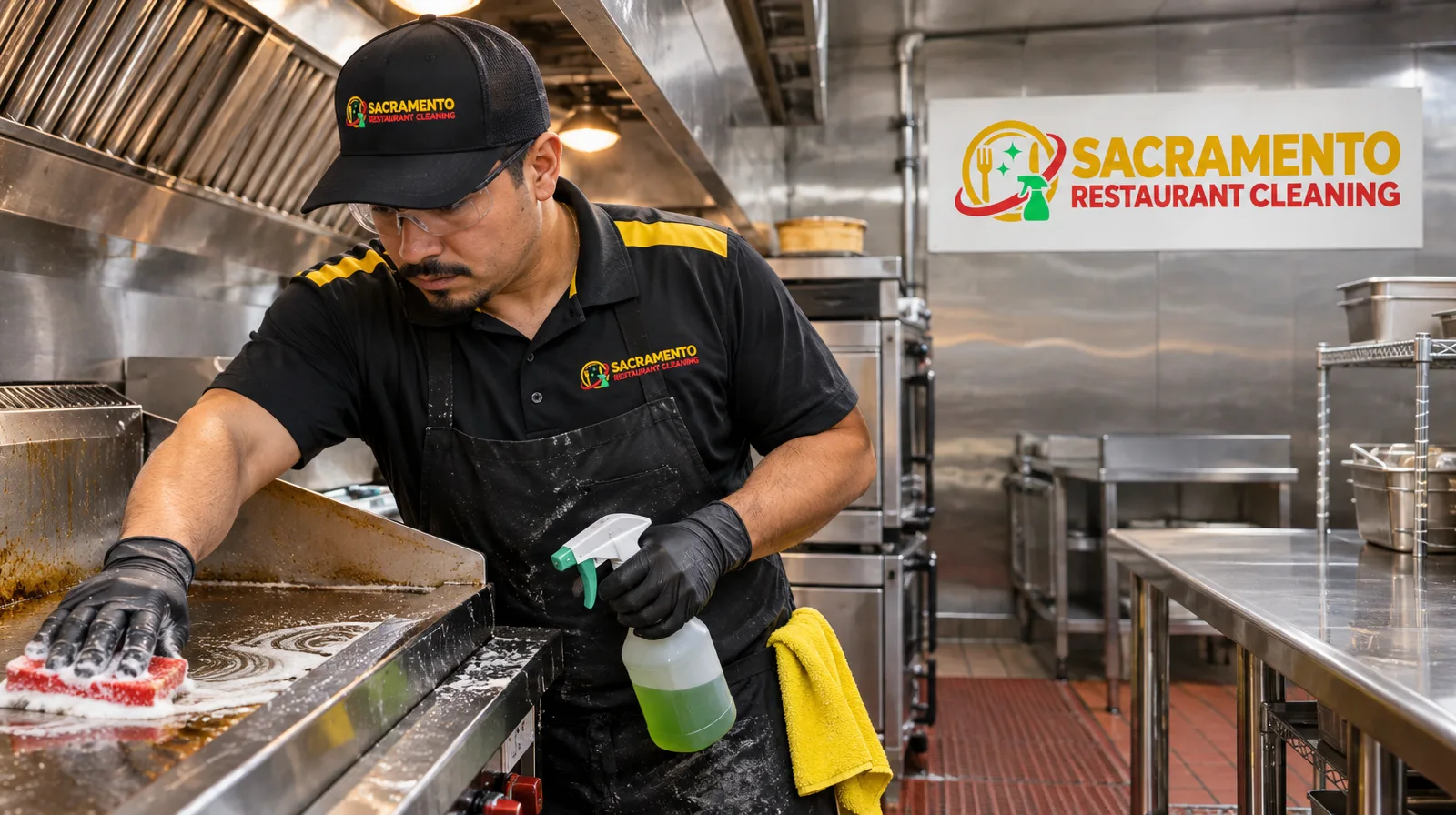
Restaurant Kitchen Cleaning Rancho Cordova helps remove the grease film, food residue, dust, and soil that routine closing work may leave behind. Sacramento Restaurant Cleaning develops the scope around the kitchen itself, including equipment placement, surface condition, access, operating schedule, and areas that need special attention.
Our restaurant service specialists serving Sacramento, CA clean kitchens in Rancho Cordova with practical methods suited to food-service environments. A walkthrough identifies the surfaces to address, areas that must remain dry, equipment that can be moved safely, and work that requires coordination with restaurant staff. The resulting scope may cover cooking-line exteriors, floors, walls, stainless steel, shelving, prep-area surfaces, and elevated dust-catching areas.
Rancho Cordova has restaurant activity near the Highway 50 corridor, office areas, shopping centers, and light-industrial properties. These settings can create different scheduling and access needs. A lunch-focused operation may need work after the afternoon rush, while a dinner restaurant may prefer overnight service. The plan should match the kitchen's shutdown window rather than force the operation into a generic cleaning schedule.
A useful scope distinguishes cleanable exposed surfaces from equipment interiors and systems that require specialized service. Typical work can include degreasing equipment exteriors, cleaning backsplash areas, wiping accessible pipes and conduit, scrubbing walls, detailing shelving, and cleaning floor edges beneath accessible equipment. Crews can also address splash zones, prep tables, sinks, lower wall panels, baseboards, doors, and washable waste-area surfaces when included in the agreed scope.
Commercial kitchen floors often need more than a quick mop. Grease collects in grout lines, corners, under equipment edges, and along the wall-to-floor joint. Depending on the flooring and soil level, cleaning may involve degreaser dwell time, agitation, wet recovery, and repeated rinsing. Chemical choice and dilution must suit the surface. Stainless steel, painted walls, quarry tile, vinyl, rubber components, and aluminum do not all respond to the same product.
This work does not replace hood and duct cleaning, fire-suppression service, pest control, or appliance repair. Exhaust-system interiors should be handled under the appropriate specialist scope. Defining those boundaries before work begins protects equipment and gives restaurant managers a clear record of what will be cleaned.
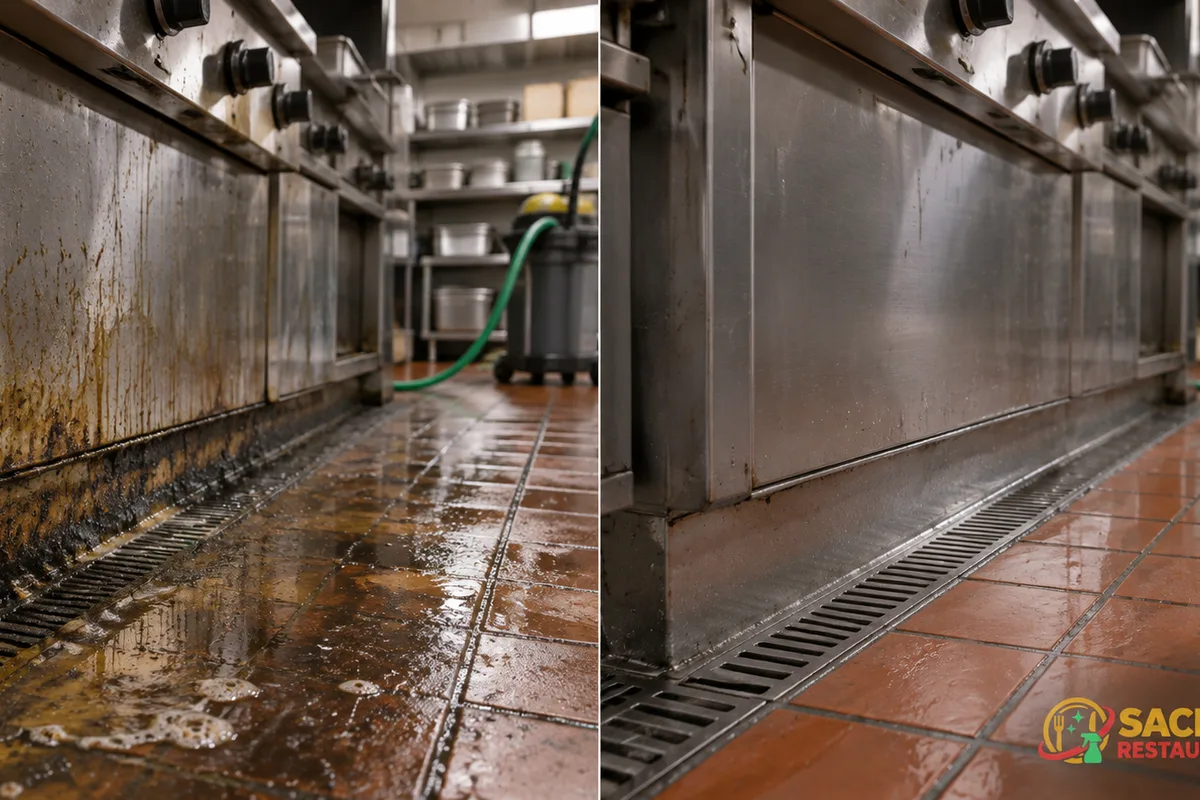
Degreasing can address accessible sides, fronts, legs, casters, control surrounds, and the floor beneath equipment that staff have disconnected or approved for safe movement.
Washable wall surfaces and backsplashes collect atomized grease and food splash. Product strength, dwell time, and agitation are adjusted to the finish.
Scrubbing focuses on traffic lanes, perimeter buildup, grout lines, corners, and accessible areas under the line, followed by controlled recovery and rinsing.
Stainless surfaces are cleaned with attention to grain direction, residue removal, and chemical compatibility. Abrasive methods are avoided unless the surface permits them.
Accessible shelving, racks, worktables, and exterior storage surfaces can be cleaned after food, utensils, and removable contents are secured by restaurant staff.
Ledges, accessible ceiling vents, tops of pipes, conduit, and other elevated horizontal surfaces can be added to control dust and greasy deposits.
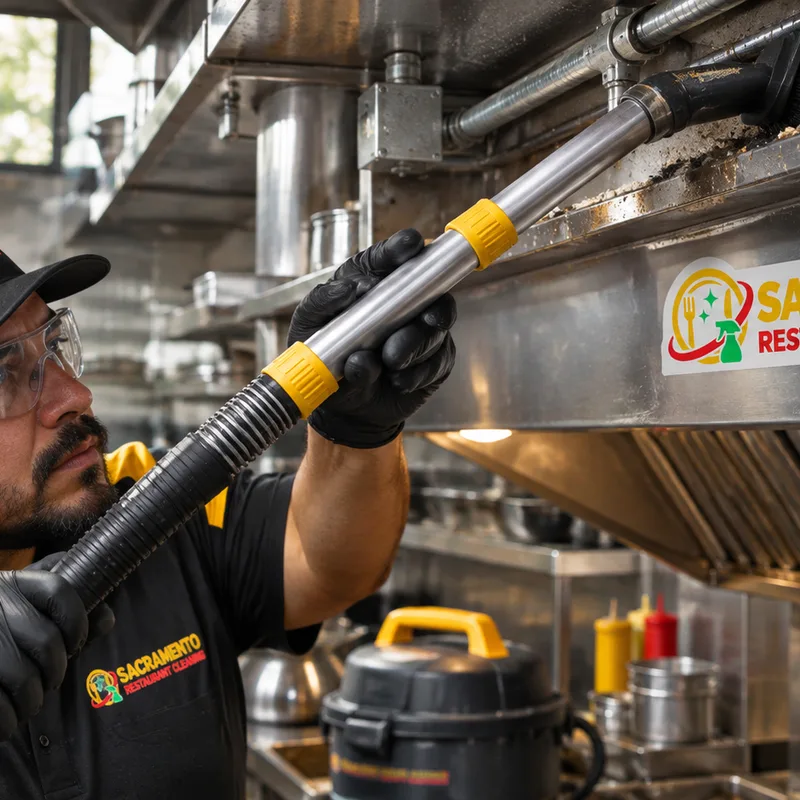
Restaurant High Dusting Rancho Cordova targets elevated surfaces that are easy to miss during daily cleaning. Dust and aerosolized grease can settle on pipe runs, conduit, accessible duct exteriors, wall ledges, refrigeration tops, light housings, and other horizontal surfaces. When that material is disturbed, it can fall onto lower areas and create more cleanup work.
The method depends on the deposit. Dry dust may be captured with a commercial vacuum fitted with appropriate attachments or removed with controlled microfiber wiping. Greasy dust generally needs a compatible degreasing product and damp wiping. Crews should work downward so released soil does not recontaminate finished surfaces. Food, utensils, and exposed prep items must be removed or protected before elevated work starts.
Access is reviewed during the walkthrough. Some areas can be reached with extension tools, while others require an approved ladder and enough clear floor space for safe setup. Fragile fixtures, energized components, open electrical boxes, fire-suppression devices, and exhaust interiors require specific precautions or exclusion. The written scope should identify which elevated surfaces are accessible and which require another qualified provider.
We review the cooking line, prep areas, flooring, elevated surfaces, access points, water availability, shutdown window, and current buildup. Restaurant staff can identify recurring trouble spots and equipment that must remain in place.
The plan identifies included surfaces, exclusions, access responsibilities, timing, and any preparation required before arrival. This is also when one-time deep cleaning or recurring service is selected.
Food and utensils are secured, sensitive items are protected, warning signs are placed, and approved equipment movement is coordinated. Cleaning products are selected for the surfaces and soil involved.
Elevated dust and residue are addressed first. Crews then work through walls, equipment exteriors, shelving, edges, and floors so falling soil does not land on completed work.
The crew checks the agreed scope, removes recoverable residue, and notes areas that could not be accessed. The kitchen is left for restaurant staff to complete any required setup before production resumes.
A one-time deep cleaning is useful when buildup has accumulated, a kitchen is preparing for a change in operation, or management wants to reset areas that have fallen outside the daily routine. The first visit may require more dwell time and agitation because old grease can harden around casters, grout, wall edges, and equipment seams.
Recurring cleaning is designed around the rate at which soil returns. A high-volume cooking line may need frequent attention around fryers and floor edges, while high dusting may fit a different interval. There is no useful universal schedule. Menu, cooking method, ventilation, operating hours, staffing routines, and equipment layout all affect how quickly residue develops.
Rancho Cordova restaurants near office employment areas may have concentrated weekday service periods, while locations near retail or Highway 50 may operate across longer traffic windows. Scheduling can be arranged for a closed day, after service, or during another planned shutdown. Sacramento Restaurant Cleaning can separate the kitchen into priority zones when the available window is too short for the full scope.
Restaurant kitchen cleaning is generally quoted after the actual conditions are reviewed because square footage alone does not show the workload. The strongest price drivers are grease thickness, number of cooking appliances, floor condition, elevated access, equipment movement, water and drainage access, and the length of the available work window.
A compact kitchen with heavy, aged buildup can require more labor than a larger kitchen with open access and a maintained cleaning schedule. Grout lines, closely spaced equipment, low clearances, and limited staging space also slow detailed work. High dusting adds setup time when surfaces require ladders, extension equipment, or careful protection of fixtures and prep areas.
Restaurant managers can make the estimate more useful by identifying the desired completion window, sharing photos, and listing any equipment that cannot be moved. A walkthrough confirms the included surfaces and any exclusions before scheduling. That keeps the proposal tied to visible conditions instead of a generic per-square-foot assumption.
Arrange a kitchen walkthrough to define the priority areas, shutdown window, high-dusting access, and written cleaning scope before work is scheduled.
Call for a Free QuotePricing is based on the agreed scope, current buildup, access, equipment density, and work window. Heavy grease, detailed grout cleaning, equipment movement, and elevated surfaces increase labor. A walkthrough at the Rancho Cordova kitchen provides the clearest basis for a written estimate.
Yes, work can be planned around an after-service window, a closed day, or another approved shutdown period. The schedule must leave enough time for cleaning, wet recovery, drying, inspection, and any setup restaurant staff need to complete before food preparation resumes.
Hood and exhaust-system interiors are separate from general restaurant kitchen cleaning unless they are explicitly assigned to a properly qualified provider. The written scope can include accessible exterior surfaces, but duct interiors, fans, fire-suppression components, and regulated exhaust work require their own service arrangements.
Staff should secure food, utensils, small appliances, and removable prep items, then identify equipment that must remain energized or stationary. Access routes, water availability, alarm procedures, parking or loading instructions, and authorized equipment movement should be confirmed before the Rancho Cordova service window begins.
The interval should be based on the kitchen's cooking volume, menu, ventilation, equipment layout, and daily cleaning results. Frying and high-heat cooking often create faster grease accumulation near the line. Floors and equipment edges may need one interval, while Restaurant High Dusting Rancho Cordova may be scheduled less often after an initial detailed cleaning.
Accessible areas beneath equipment can be included when movement is safe, approved, and coordinated in advance. Gas, electrical, plumbing, or fixed connections must not be disturbed by a general cleaning crew. The walkthrough identifies movable units, restricted areas, and any preparation restaurant staff must arrange.
Yes, a limited window can be handled by prioritizing zones or dividing the work across scheduled visits. Rancho Cordova kitchens with tight turnaround times should identify the greasiest line areas, floor edges, or elevated surfaces first so the available labor is directed to the agreed priorities.
Share your kitchen's condition, operating schedule, and priority areas. Sacramento Restaurant Cleaning will help define a practical scope for detailed cleaning and high dusting.