
Cooking-Line Degreasing
Degreasing of compatible ranges, fryers, griddles, ovens, salamanders, prep equipment, and surrounding stainless steel. Cleaning methods are selected for the finish, soil level, and manufacturer restrictions.
Serving Sacramento, California & surrounding areas
Detailed cleaning for cooking equipment, exhaust systems, floors, walls, and high-use areas, scheduled around your Sacramento operation.
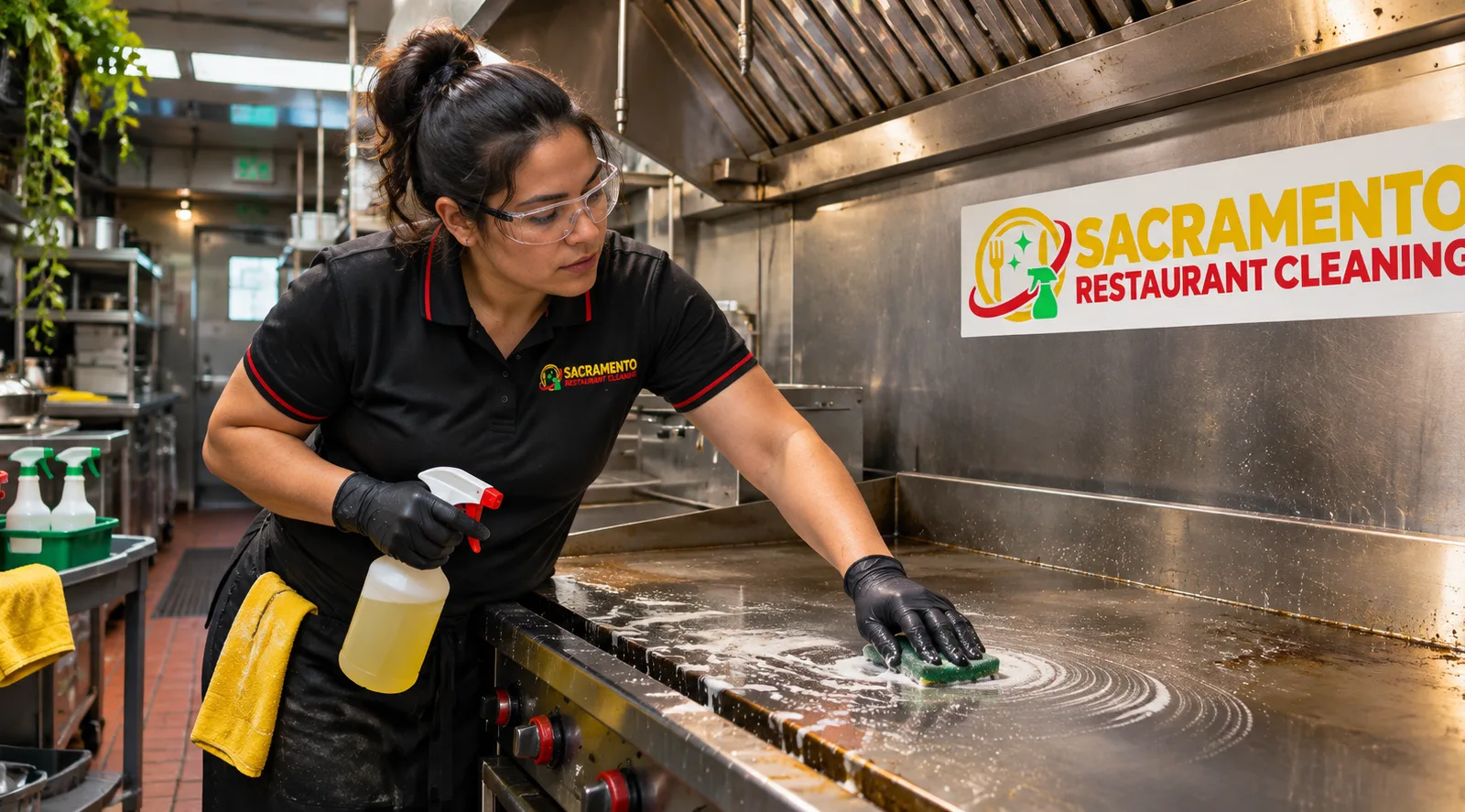
Commercial Kitchen Cleaning Services address the grease, carbon, food residue, and soil that routine closing work can leave behind. Sacramento Restaurant Cleaning develops a written scope around your equipment, production schedule, access requirements, and problem areas. The goal is a kitchen that is easier for your staff to maintain and ready for the next shift.
As Sacramento's trusted restaurant service team, we plan the work by zone, identify surfaces that require special handling, and coordinate cleaning during practical downtime. That matters for restaurants with late closing times, commissaries with early production runs, and kitchens that cannot take every line out of service at once. Our team works from 2122 X St, Suite 4 in Sacramento and serves commercial food operations across the area.
A proper scope distinguishes daily sanitation from periodic deep cleaning. Your staff may already clean food-contact surfaces, empty debris, and mop each night. Professional kitchen cleaning goes further into equipment exteriors, undersides, casters, wall junctions, floor edges, and accumulated deposits around the cook line. Before work begins, we clarify what will be cleaned, what must cool or be moved, and when each area can return to normal use.
Degreasing of compatible ranges, fryers, griddles, ovens, salamanders, prep equipment, and surrounding stainless steel. Cleaning methods are selected for the finish, soil level, and manufacturer restrictions.
Exterior panels, legs, casters, handles, ledges, and accessible areas beneath or behind movable units are cleaned as agreed in the scope. Equipment is handled only when it is cool, isolated, and safe to access.
Commercial kitchen deep cleaning targets grout lines, wall splash zones, base transitions, corners, and buildup beneath equipment. Slip-resistant flooring requires careful rinsing and soil extraction rather than simply spreading degreaser with a mop.
Shelving exteriors, prep tables, sinks, racks, and non-food-contact surfaces can be included. Food, utensils, and sensitive supplies must be protected or removed before cleaning starts.
Visible canopy surfaces and removable filters may be addressed when included in the written scope. Cleaning the full exhaust system is specialized work and should be confirmed separately, including fan, duct, and roof-access requirements.
Weekly, monthly, quarterly, or condition-based visits can focus on zones that accumulate grease fastest. Recurring scopes help managers divide routine staff duties from periodic professional cleaning.
A restaurant kitchen cleaner should understand that every surface cannot be treated the same way. Stainless steel, quarry tile, grout, sealed wall panels, painted surfaces, rubber flooring, and equipment controls have different tolerances. Strong chemicals are not automatically better. Product choice, dilution, dwell time, agitation, rinsing, and soil recovery all affect the result.
The Sacramento area includes very different operating environments. Midtown restaurants often work within compact kitchens where equipment movement and service access must be tightly planned. Downtown kitchens may have loading, parking, or building-access windows that shape crew arrival and waste removal. Natomas has restaurants in larger commercial developments where property-management rules can affect after-hours entry. East Sacramento's neighborhood restaurants often need quiet, carefully timed work near surrounding residences. Industrial operations around Power Inn may have larger production areas, floor drains, and equipment lines that call for zone-by-zone scheduling.
Hot, dry Sacramento summers can add to the heat burden around cook lines. Deep cleaning is safer and more effective after appliances cool, especially when degreasers require controlled dwell time. We agree on shutdown needs before the appointment rather than asking the kitchen team to improvise during the visit.
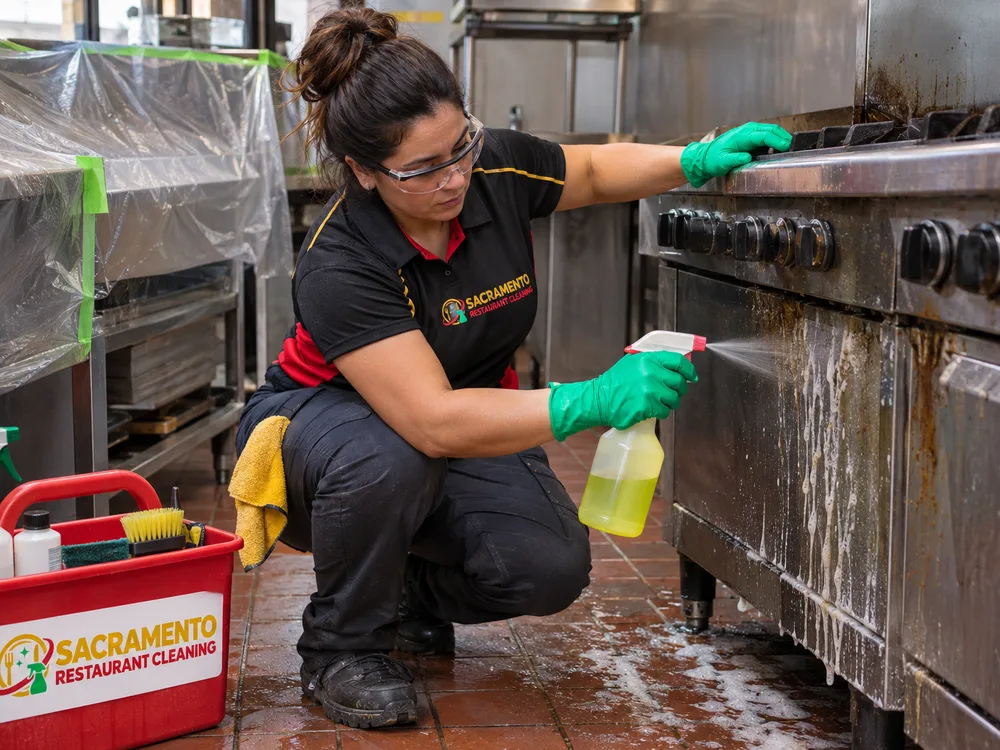
We discuss the facility type, operating hours, equipment, current condition, access, and priority areas. Photos or an on-site review may be needed when buildup is heavy or the scope includes hard-to-reach spaces.
The written scope identifies included zones, exclusions, preparation duties, timing, and any equipment that must be shut down, cooled, disconnected, or moved by an authorized person.
Food and utensils are secured, sensitive components are protected, and the work area is separated where practical. The crew verifies access to water, drainage, and approved waste-disposal points before wet work begins.
The team applies the appropriate cleaner, allows controlled dwell time, agitates deposits, and removes loosened soil. Work proceeds by zone so cleaned areas are not contaminated by unfinished ones.
Residue is removed from the cleaned surfaces, excess moisture is recovered, and the area is left to dry. A final review checks the agreed scope and identifies maintenance needs or buildup that requires a separate treatment.
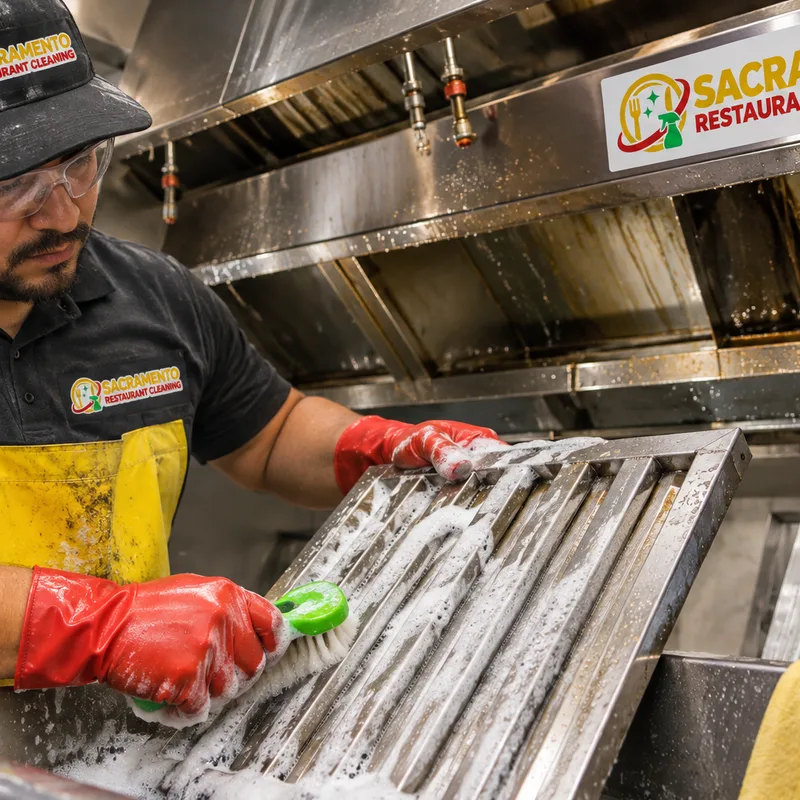
Restaurant hood cleaning in Sacramento may refer to visible canopy cleaning, filter cleaning, or complete exhaust-system service. Those are different scopes. A full system can include the hood plenum, filters, ductwork, exhaust fan, and accessible grease-removal components. Roof access, fan condition, duct configuration, and service panels affect what technicians can reach.
Commercial cooking exhaust systems are commonly evaluated against NFPA 96 requirements and the rules that apply to the specific facility. Cleaning frequency is not one universal calendar interval. It depends on cooking volume, fuel type, menu, grease production, and system condition. High-volume frying or solid-fuel cooking can require more frequent attention than low-volume operations.
When requesting a hood-related quote, state whether you need cosmetic canopy cleaning or cleaning through the exhaust path. Ask what components are included, how access is handled, whether removable filters are part of the work, and what completion documentation is provided. Sacramento Restaurant Cleaning will clarify the proposed scope so kitchen managers can compare like-for-like work.
Start with scope, safety, and scheduling. A useful proposal should identify the rooms, equipment, and surfaces included rather than promising a generic deep clean. It should also state whether the crew moves equipment, cleans internal components, handles exhaust ductwork, or limits work to accessible exterior surfaces.
Ask how the company protects electrical controls, pilot assemblies, food-contact items, and nearby ingredients. Confirm who is responsible for shutting down appliances and whether a qualified person must disconnect gas or electrical connections. Cleaning staff should not improvise around energized equipment, hot oil, or inaccessible mechanical components.
Timing also matters. A small café kitchen with moderate soil may fit into one service window, while a large or heavily soiled operation may need staged work. If the kitchen must reopen early, identify which equipment has to be dry and available first. Reliable Restaurant Kitchen Cleaners in Sacramento should be able to explain how staffing, dwell time, access, and drying affect the schedule.
Finally, compare proposals by the same scope. One quote may cover floors and equipment fronts, while another includes movement of approved equipment, wall detailing, filters, or overnight access. The lower total can represent less work rather than a better rate.
Commercial kitchen cleaning in Sacramento typically costs about $500 to $1,500 for a focused deep clean, while large, heavily soiled, or multi-zone kitchens may cost $1,500 to $5,000 or more. A limited floor or equipment-detailing visit can cost less, and full exhaust-system cleaning is usually quoted separately.
Final price depends on kitchen size, grease level, equipment movement, hood-system scope, access, crew hours, and whether work must occur overnight. Photos help with initial pricing, but the exact cost is confirmed after a facility review or consultation.
Share your operating hours, priority areas, and current kitchen condition to receive a practical scope built around your next available cleaning window.
Call for a Free QuoteA focused cleaning may fit within one closed-service window, while a large or heavily soiled kitchen can require staged visits. Equipment count, grease buildup, access behind the cook line, chemical dwell time, rinsing, and drying all affect duration. Sacramento kitchens with strict loading or building-access windows should provide those limits during scheduling.
The work area generally must be out of production, with affected appliances shut down and cool before deep cleaning starts. Some facilities can keep separate zones operating if food, staff, and airflow are protected. We establish the required shutdown area and reopening order before the crew arrives.
Staff should remove or securely protect food, utensils, small appliances, and personal items from the agreed work zones. Fryers may need oil removal, equipment must have time to cool, and authorized personnel should handle utility disconnections. Clear access to water, drains, and waste areas also helps the visit stay on schedule.
Equipment exteriors and accessible surrounding surfaces can be included, but internal mechanical or electrical components require explicit approval and may need a qualified equipment technician. Ovens, fryers, refrigeration units, and control panels all have manufacturer-specific limits. The proposal states which surfaces and components the cleaning crew will address.
The right interval depends on cooking volume, menu, grease production, staffing routines, and the condition of individual zones. Fry lines and floor edges may need more frequent attention than dry storage or low-use prep areas. Sacramento operators can use inspection observations and buildup trends to set a recurring plan rather than relying on one interval for the entire facility.
Fan and ductwork are included only when the proposal specifically describes full exhaust-system cleaning. Visible hood wiping or filter cleaning does not mean the entire grease-removal path has been serviced. Confirm the canopy, plenum, filters, ducts, fan, access panels, roof access, and documentation before approving the work.
After-hours scheduling can often be arranged around the kitchen's operating window and the time needed for appliances to cool and surfaces to dry. Downtown access restrictions, property-management procedures in commercial developments, and early production starts should be discussed during planning. The schedule is confirmed as part of the written scope.
Tell Sacramento Restaurant Cleaning about your equipment, operating schedule, and problem areas. We will outline the work, preparation needs, and timing before cleaning begins.