
Dining Areas
Tables, seating, booths, host stations, ledges, partitions, interior glass, floors, baseboards, and accessible high-touch surfaces can be assigned by frequency.
Serving Sacramento, California & surrounding areas
Dependable cleaning for kitchens, dining rooms, restrooms, and staff areas, scheduled around your operating hours and documented with a clear scope.
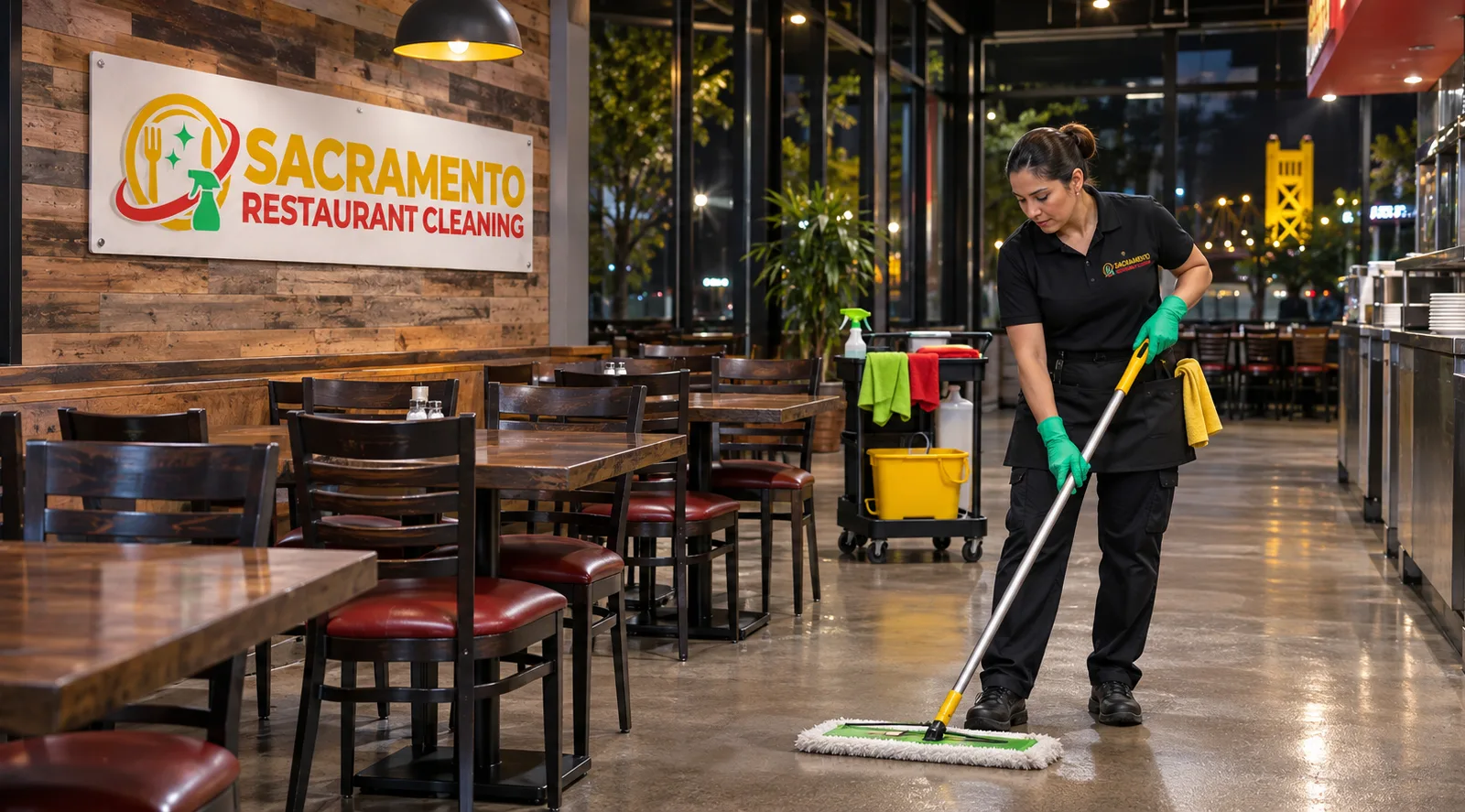
Restaurant Cleaning West Sacramento operators can rely on starts with a written task list, a practical schedule, and close attention to high-use areas. Sacramento Restaurant Cleaning handles recurring and one-time work for dining rooms, commercial kitchens, restrooms, bars, entry areas, and employee spaces. The scope can be set for nightly, weekly, or periodic service based on operating hours, customer traffic, menu, and in-house cleaning responsibilities.
We are Sacramento's restaurant service specialists, planning the work around how a restaurant actually operates. That means identifying closing procedures, approved access times, alarm instructions, chemical restrictions, waste handling expectations, and the areas that need documented attention. A small counter-service location may need frequent floor and restroom care, while a full-service dining room may require more time for tables, booths, glass, host stations, and under-seat debris.
West Sacramento includes restaurant activity near Downtown and the riverfront, along major corridors such as West Capitol Avenue, and around commercial areas in Southport. Each setting creates a different cleaning pattern. Riverfront dining can bring concentrated evening traffic, corridor locations may see steady entry-floor soil, and Southport establishments may need schedules built around neighborhood meal periods. The plan should follow actual use rather than a generic checklist.
Front-of-house work focuses on what guests see and touch. Typical tasks include cleaning tables and chairs, wiping booths, sanitizing host stands, spot-cleaning doors and partitions, removing fingerprints from glass, emptying waste, and vacuuming or mopping floors. Corners, chair legs, baseboards, and the floor beneath movable furniture need periodic detailed attention because routine closing work can miss them.
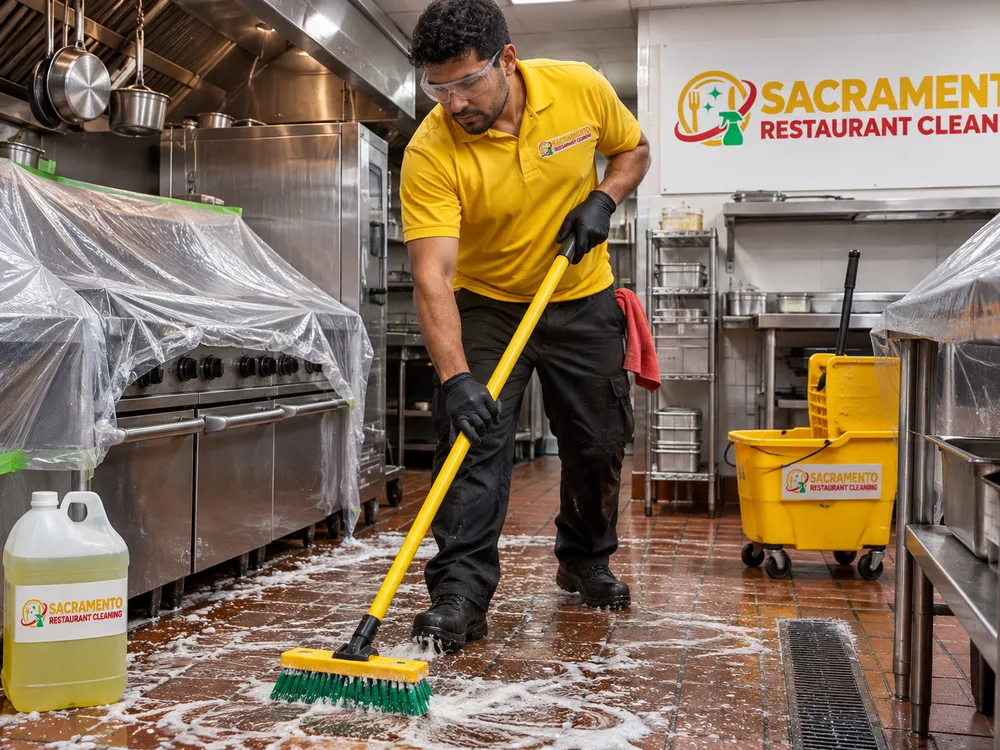
Back-of-house cleaning requires a different method. Food debris and grease must be removed before a surface is sanitized because soil can interfere with the sanitizer. Work may include degreasing washable walls, cleaning prep-area floors, wiping exterior equipment surfaces, detailing floor edges, and cleaning beneath movable equipment when access is authorized. Food-contact surfaces require products and procedures suitable for that use, including the label's dilution and contact-time instructions.
Commercial kitchen floors often need degreaser, agitation, controlled rinsing, and extraction or wet pickup. A mop alone can spread greasy residue. Staff also need to keep cleaning tools designated for restroom use separate from tools used in kitchen and dining areas to reduce cross-contamination.
Tables, seating, booths, host stations, ledges, partitions, interior glass, floors, baseboards, and accessible high-touch surfaces can be assigned by frequency.
Service may include soil removal, degreasing, agitation, floor-edge detailing, washable wall care, and cleaning of approved exterior equipment surfaces.
Counters, foot rails, floor areas, splash zones, cabinet exteriors, and accessible non-food-contact surfaces receive focused cleaning around sticky residue and spills.
Fixtures, partitions, dispensers, mirrors, floors, touchpoints, and waste receptacles are cleaned with restroom-specific tools and disinfectants.
Entry glass, mats, break areas, employee restrooms, offices, and waste staging points can be included when they are part of the agreed scope.
Floor scrubbing, baseboard cleaning, high dusting, wall washing, and buildup removal can be scheduled separately from routine nightly tasks.
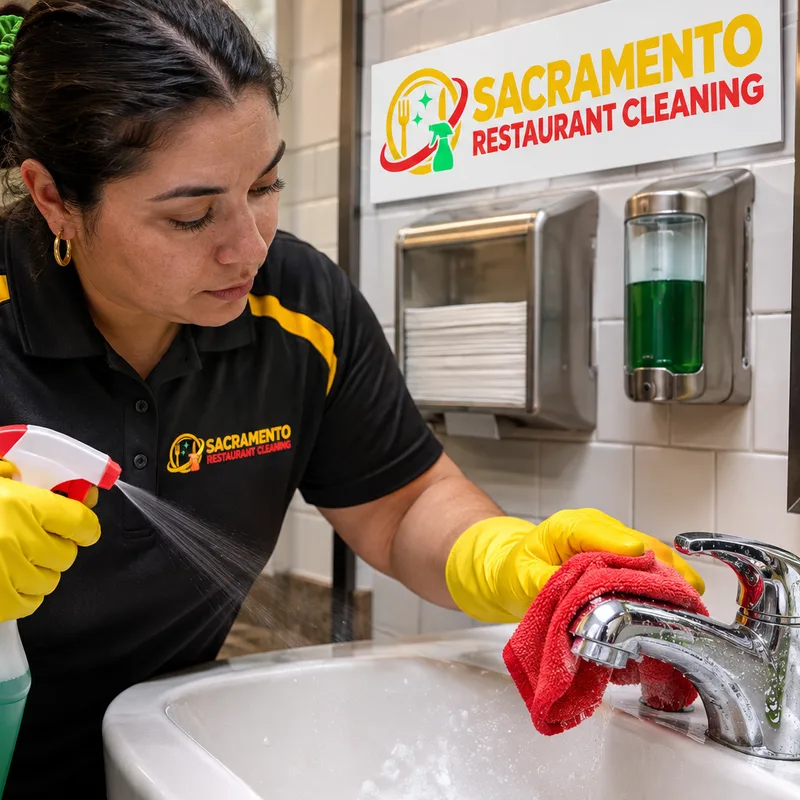
Restaurant Bathroom Cleaning West Sacramento locations need is based on traffic, fixture count, service hours, and the condition expected throughout the day. A proper restroom routine cleans and disinfects toilets and urinals, wipes partitions, polishes mirrors, cleans sinks and faucets, empties waste, services dispensers, and mops the floor. Door handles, flush controls, faucet handles, and accessible dispenser surfaces deserve specific attention because they are frequent touchpoints.
Cleaning and disinfection are separate steps when visible soil is present. The surface is cleaned first, then an appropriate disinfectant remains wet for the contact time stated on its label. Using too little product or wiping it away too soon can prevent it from being used as directed. Color-coded cloths and restroom-only tools help keep bathroom soil away from kitchens and dining rooms.
Restroom care also includes reporting conditions that cleaning cannot fix, such as a leaking fixture, failed dispenser, damaged caulk, persistent drain odor, or loose toilet seat. Sacramento County's Environmental Management Department oversees retail food facility inspections in West Sacramento, so restaurant sanitation routines should support the establishment's broader food-safety practices. Cleaning service does not replace employee hygiene, food-safety controls, pest management, or required maintenance.
The first review covers the dining room, kitchen, restrooms, bar or beverage area, entry, employee spaces, floor materials, access limits, and current trouble spots.
Each task is assigned a frequency, such as every service, weekly, or periodic. The scope also states which duties remain with restaurant employees.
The schedule accounts for closing time, final kitchen breakdown, deliveries, security procedures, and the time needed for floors or treated surfaces to dry.
If grease, restroom scale, floor film, or edge buildup is already present, initial detail work may be needed before routine service can maintain the desired condition.
Completed work is reviewed against the agreed checklist. Seasonal traffic, menu changes, special events, or revised operating hours can trigger a scope update.
West Sacramento restaurants deal with dry summer dust that tracks through entrances and settles along floor edges. During rainy periods, entry mats and hard floors need closer attention to moisture and tracked soil. These conditions affect task frequency, especially at exterior doors, waiting areas, and routes between patios and dining rooms.
Floor type also matters. Quarry tile and textured commercial tile may hold grease in grout lines and low points, while luxury vinyl tile needs compatible chemicals and controlled moisture. Finished floors require products that will not strip or haze the coating. Natural stone, if present, calls for pH-appropriate products rather than aggressive acidic cleaners. The cleaning plan should identify floor materials before chemicals or machine pads are selected.
Dependable service also depends on communication. Managers should know what was completed, what could not be accessed, and whether a maintenance issue was observed. If an event, delivery, equipment repair, or late close changes access, the crew needs updated instructions. A written scope gives both sides a clear reference and helps prevent important tasks from being assumed rather than assigned.
Get a cleaning scope based on your restaurant's layout, operating hours, floor materials, restroom traffic, and division of duties between your staff and the cleaning crew.
Call for a Free QuoteRestaurant cleaning is normally priced after a walkthrough because square footage alone does not show the labor required. The quote depends on service frequency, kitchen grease, restroom count, floor material, seating layout, access time, and whether initial detail cleaning is needed. A written proposal should separate recurring tasks from periodic work such as machine scrubbing or high dusting.
Yes, service can be planned after closing when access, alarm procedures, and the final kitchen breakdown time are confirmed in advance. West Sacramento restaurants with late service, bar traffic, or scheduled deliveries may need a later start or a split task schedule. The agreed window should leave enough time for cleaned floors to dry before employees return.
The right frequency depends on customer volume, operating hours, fixture count, and how often employees check the restroom during service. Professional cleaning may be scheduled with each recurring visit, while restaurant staff handle checks, spills, and restocking during open hours. High-traffic restrooms may also need periodic detail work for grout, partitions, floor edges, and mineral residue.
Cleaning can cover approved exterior equipment surfaces and accessible areas around or beneath movable units, but the exact scope must be set during the walkthrough. Internal equipment cleaning, hood and duct service, fire-suppression components, and work requiring disassembly may require specialized providers. Equipment must be cool, safe to access, and cleared according to the agreed procedure.
A useful checklist names each area, task, frequency, approved method, and responsible party. It should distinguish food-contact surfaces from non-food-contact surfaces, keep restroom tools separate, identify periodic floor care, and record access restrictions. It should also state which closing duties remain with restaurant employees, including food storage and equipment shutdown.
A one-time deep clean can be planned after an on-site review of buildup, access, equipment placement, and the available work window. Newly occupied spaces, seasonal resets, and restaurants recovering from heavy traffic often need more edge work, floor agitation, wall cleaning, and restroom detailing than a routine visit. Construction debris or specialized exhaust cleaning should be identified separately.
The start date depends on walkthrough availability, scope approval, access arrangements, and whether baseline cleaning is required first. A straightforward dining room and restroom schedule can be easier to launch than a kitchen with established grease buildup or restricted overnight access. The proposed schedule should be confirmed before the first visit rather than assumed.
Tell Sacramento Restaurant Cleaning about your dining areas, kitchen, restrooms, operating schedule, and current problem spots. You will receive a practical scope that identifies recurring duties, periodic detail work, and the next steps for getting service underway.