Restaurant Deep Cleaning · Sacramento

Restaurant Cleaning Company in Sacramento

Detailed cleaning for commercial kitchens, dining areas, walk-in coolers and hard-to-reach surfaces, planned around your operating schedule.

✓ Written facility-specific scope
✓ Scheduling around operating hours
✓ Surface-compatible methods
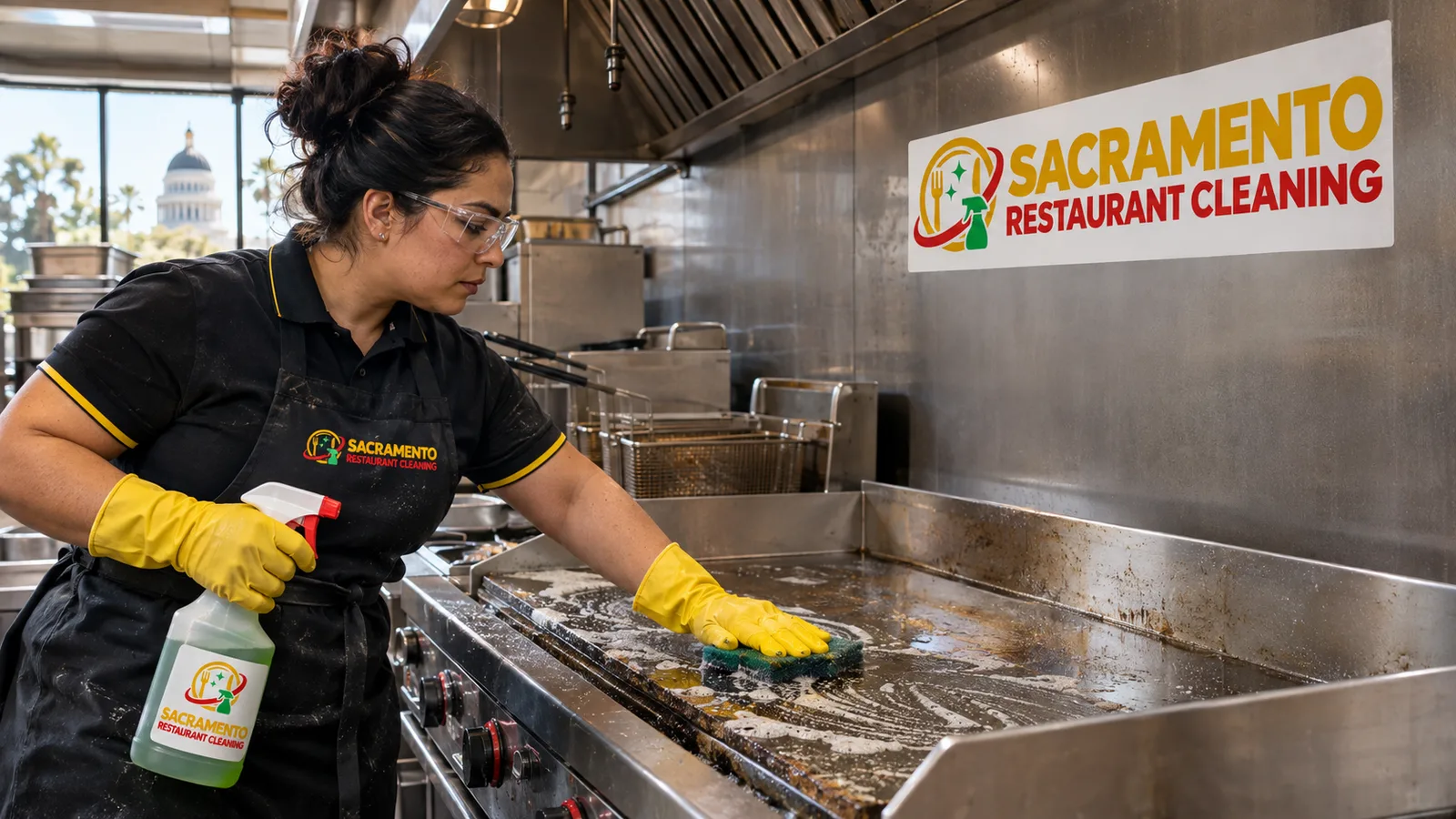
A trained restaurant cleaner degreasing stainless steel cooking equipment in a Sacramento commercial kitchen during a scheduled deep clean
Detailed Facility Care

A Restaurant Cleaning Company Built for Detailed Work

Routine closing duties keep a restaurant ready for the next shift, but they rarely address grease behind equipment, residue on walls, buildup inside a walk-in cooler or dust on overhead surfaces. Sacramento Restaurant Cleaning handles the detailed work that is difficult to fit into daily operations. Our restaurant deep cleaning services can cover the kitchen, food storage areas, dining room and other agreed spaces under one written scope.

We begin by reviewing the facility, identifying priority areas and discussing when the work can take place. Drawing on our work as an experienced restaurant service team in Sacramento, we plan around active kitchens, limited access windows and the need to keep cleaning methods appropriate for each surface. The result is a practical schedule rather than a generic checklist.

Our location on X Street puts us near restaurants in Midtown, where compact kitchens and closely spaced equipment can make access a major part of the job. In Downtown Sacramento, loading arrangements and restricted service windows may shape crew timing. East Sacramento has neighborhood restaurants where quiet scheduling matters, while Natomas includes larger commercial sites that may require a zone-by-zone plan. These conditions are considered before the scope is finalized.

Cleaning Scope

Restaurant Deep Cleaning Services

Kitchen Deep Cleaning

Detailed cleaning can address floors, walls, stainless steel surfaces, prep areas and accessible spaces behind or beneath movable equipment. Grease is treated with a compatible degreaser and allowed proper dwell time before agitation and removal.

Walk-In Cooler Cleaning

Walk-in cooler cleaning can include shelving, walls, floors, doors, gaskets and accessible fan guards. Food and movable inventory must be removed or protected according to the agreed plan, and water use is controlled around refrigeration components.

High Dusting

High dusting in Sacramento restaurants targets exposed pipes, beams, ledges, vents and other elevated surfaces that routine crews cannot safely reach. Access height, ceiling type and conditions over food-contact areas determine the equipment and containment needed.

Dining and Service Areas

Restaurant detailed cleaning can include baseboards, chair and table bases, partitions, window ledges, service stations and other touchpoints. Surface-compatible products help protect finished wood, metal, stone and upholstery.

Floors and Edges

The plan may cover scrubbing, edge work and soil removal around equipment legs and floor-to-wall transitions. The method is matched to quarry tile, sealed concrete, resilient flooring or another installed material.

Restrooms and Staff Areas

Agreed support spaces can receive detailed cleaning of fixtures, partitions, floors, touchpoints and buildup-prone edges. These areas are scheduled as part of the same facility plan when requested.

Kitchen Detail Work

Commercial Kitchen Deep Cleaning in Sacramento

Commercial kitchens require more than broad surface wiping. Grease can collect along equipment sides, splash zones, casters, wall junctions and floor edges. A professional restaurant deep cleaning plan identifies which equipment may be moved, which components must remain untouched and where moisture must be controlled. Electrical panels, gas connections, pilot assemblies and sensitive controls are not treated like washable surfaces.

Crews use soil-specific methods. Degreaser needs adequate dwell time to loosen fats, while agitation helps release buildup from textured tile and grout lines. Clean tools should be separated by use area to reduce cross-contact, and food-contact surfaces require an appropriate final treatment before the kitchen returns to service. Product labels and the facility's chemical handling rules guide dilution, contact time and rinsing.

Sacramento's dry season can increase dust carried into restaurants through entrances and air movement. That makes overhead ledges, return grilles and exposed building elements useful additions to periodic deep cleaning. High dusting should occur before lower surfaces and floors so settled material is collected during the later stages of work.

Request a Callback
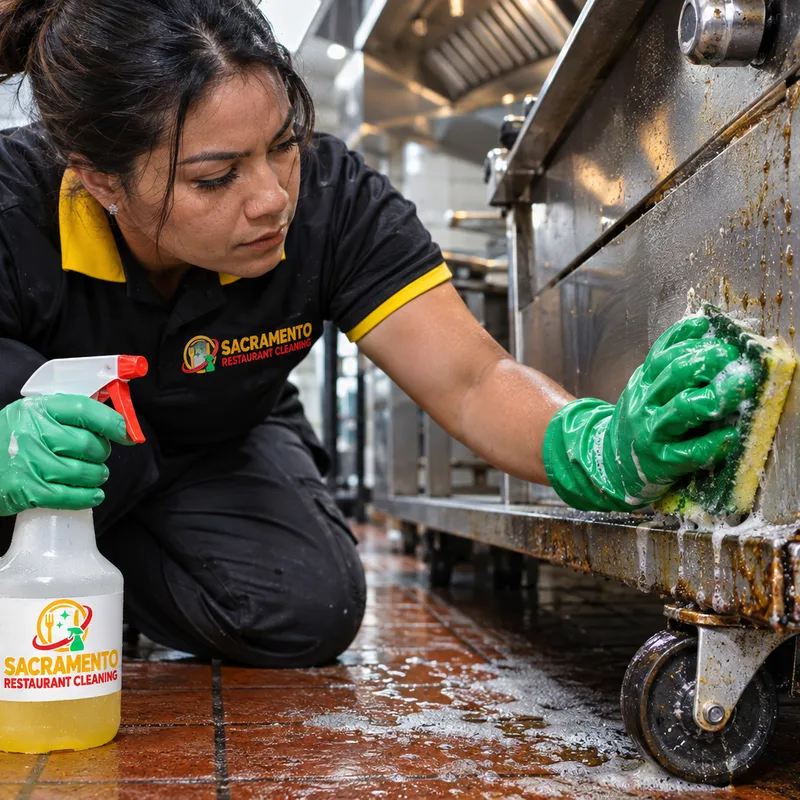
Close view of a restaurant cleaner removing grease from the side, casters and floor edge around commercial cooking equipment
Detailed work reaches grease and soil around equipment edges, casters and wall junctions.
A Clear Service Sequence

How Professional Restaurant Deep Cleaning Works

  1. 01

    Facility Walkthrough

    We review the kitchen, walk-in cooler, dining area and requested support spaces. The walkthrough identifies soil conditions, access limits, sensitive finishes, elevated work and equipment that may need to be moved by authorized personnel.

  2. 02

    Written Scope and Scheduling

    The scope lists the included areas, exclusions, preparation duties and expected access window. Work may be scheduled after closing, during a shutdown period or in phases when the restaurant cannot release the entire facility at once.

  3. 03

    Preparation and Protection

    Food, utensils and movable inventory are removed or protected according to the plan. Signs, barriers and floor protection may be placed where needed, and the crew organizes tools to keep kitchen, restroom and public-area work separate.

  4. 04

    Top-to-Bottom Cleaning

    Work generally starts with elevated surfaces, then moves through walls, fixtures, equipment exteriors and lower surfaces. Floors and edges are completed after loosened soil has been collected.

  5. 05

    Final Review

    The completed areas are checked against the agreed scope. Any access limitation or condition requiring repair, specialist attention or additional work is documented before the facility is returned to the operator.

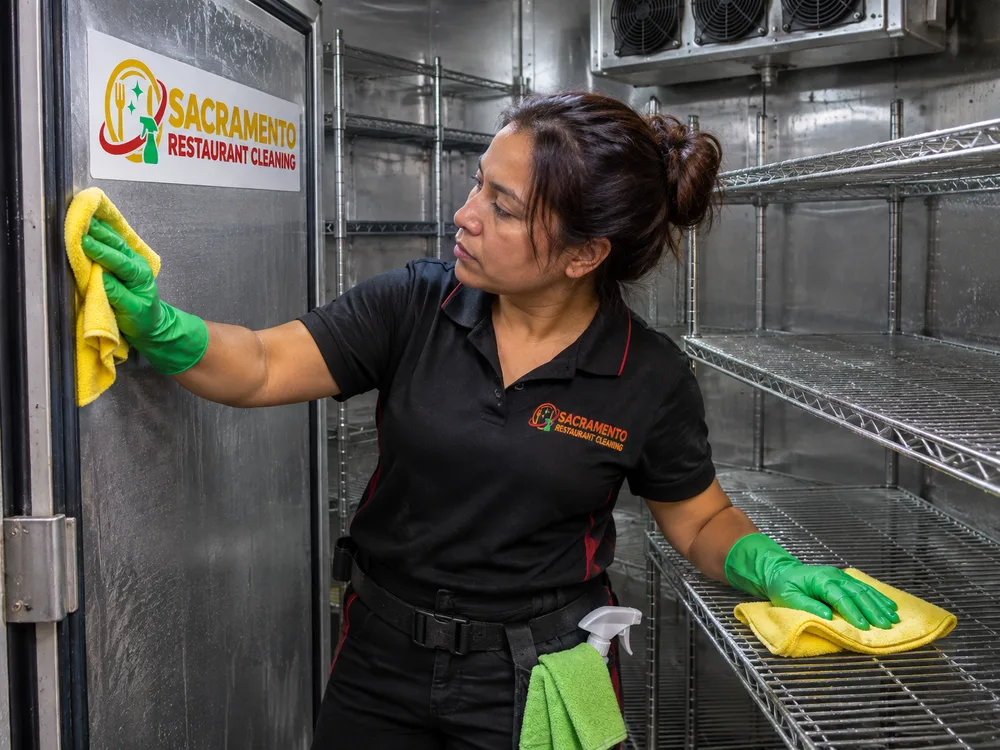
A restaurant cleaner wiping empty walk-in cooler shelving and door gaskets with food inventory removed from the work area
Cooler cleaning is planned around inventory, cold surfaces and sensitive refrigeration components.
Cold-Storage Care

Walk-In Cooler Cleaning Without Ignoring Sensitive Components

A walk-in cooler needs a controlled cleaning plan because refrigeration equipment, stored products and cold surfaces create different constraints than the main kitchen. Before work begins, the operator should decide where food and movable shelving contents will go. The cleaning crew needs clear access without compromising temperature-sensitive inventory.

A typical scope may address racks, walls, doors, handles, gaskets and floors. Soil is removed from corners and beneath movable shelving, while excess water is kept away from electrical parts and fan assemblies. Evaporator coils, refrigerant systems and mechanical repairs are specialist work and should not be included in ordinary cleaning unless handled by a qualified refrigeration provider.

Condensation and trapped food residue can contribute to odors or visible buildup. Good cleaning removes the source material, but it does not correct a damaged gasket, drainage problem or refrigeration fault. We flag those observed conditions so the operator can arrange the right repair.

Request a Callback
Compare the Scope

What to Confirm Before Hiring Restaurant Deep Cleaners

A useful proposal should define the work in physical terms. Look for named rooms, surfaces and equipment exteriors rather than a promise to clean the whole restaurant. Confirm whether the quote includes high dusting, wall washing, floor edges, movable shelving and the accessible areas behind equipment. Ask what the restaurant must remove before arrival and who is responsible for moving heavy or connected appliances.

Scheduling matters as much as scope. A small Midtown kitchen may have a narrow period between closing and morning preparation, while a larger Natomas operation may prefer phased cleaning so one production area remains available. The company should explain how long the agreed work is expected to take, what access it needs and how wet floors or chemical dwell times affect reopening.

Also discuss products and surface compatibility. Natural stone, finished wood, aluminum and some painted surfaces can react poorly to aggressive chemicals. A responsible cleaner checks the material and label directions rather than applying one degreaser throughout the facility. Sacramento County Environmental Management regulates retail food facilities locally, but a cleaning service cannot promise inspection outcomes. Its job is to complete the agreed cleaning scope and report conditions outside that scope.

Get a written cleaning scope based on your kitchen layout, operating hours, soil conditions and priority areas before work is scheduled.

Call for a Free Quote
Common Questions

Restaurant Deep Cleaning Sacramento FAQs

How much does restaurant deep cleaning cost in Sacramento?

Restaurant deep cleaning is priced after the facility, scope and access requirements are reviewed. The main cost drivers are kitchen size, grease level, equipment access, high-dusting height, cooler condition, floor type and the number of crew hours available during the service window. A compact Midtown kitchen with fixed equipment presents a different workload than a larger restaurant in Natomas. A walkthrough allows the cleaner to provide a written, facility-specific price.

How long does a restaurant deep clean take?

A restaurant deep clean may take one shift or require phased work across multiple service windows, depending on the agreed scope. Heavy grease, tightly spaced equipment, elevated surfaces and inventory removal add time. Downtown access restrictions or a short period between closing and preparation can also affect the schedule. The expected duration should be confirmed after a walkthrough.

Can cleaning be scheduled when the restaurant is closed?

Yes, restaurant cleaning can often be scheduled after closing or during a planned shutdown, subject to crew availability and facility access. The restaurant should identify alarm procedures, entry arrangements, equipment that must remain operating and the time when kitchen staff return. Quiet access may be especially important for neighborhood restaurants near residences in East Sacramento.

Does kitchen deep cleaning include moving cooking equipment?

Only equipment identified as safe and authorized to move should be relocated during kitchen deep cleaning. Appliances connected to gas, electricity, water or fixed ventilation may require restaurant personnel or a qualified trade professional. The walkthrough establishes which areas are accessible so the proposal does not assume unsafe movement.

What should be removed before walk-in cooler cleaning?

Food, open containers and movable inventory should be removed or securely protected before walk-in cooler cleaning begins. The restaurant remains responsible for maintaining safe product temperatures and selecting an appropriate storage location. Shelving may also need to be emptied so racks, walls and floors can be reached.

Can high dusting be completed over kitchen and dining areas?

Yes, high dusting can cover accessible pipes, ledges, beams and vents when the area can be isolated and reached safely. Food, utensils and preparation surfaces must be removed or protected first, and lower surfaces are cleaned afterward. Ceiling height, fixture placement and the presence of active equipment determine the access method.

Will professional restaurant deep cleaning guarantee a health inspection result?

No cleaning company can guarantee a regulatory inspection result. Sacramento County Environmental Management oversees retail food facilities, and an inspection may address food handling, temperatures, pest control, equipment condition and other matters beyond cleaning. Professional cleaning can address the written sanitation scope and document repair or access issues noticed during the work.

Plan Your Restaurant Deep Cleaning

Tell Sacramento Restaurant Cleaning which areas need attention, when the facility is available and whether you need kitchen, cooler or high-dusting work. We will use those details to prepare the next step.