
Kitchen Floors
Degreasing and agitation for floors around cook lines, prep stations, dishwashing areas, floor drains, and accessible spaces beneath movable equipment.
Serving Sacramento, California & surrounding areas
Scheduled floor care and kitchen deep cleaning built around food-service hours, traffic, grease exposure, and the flooring materials in your facility.
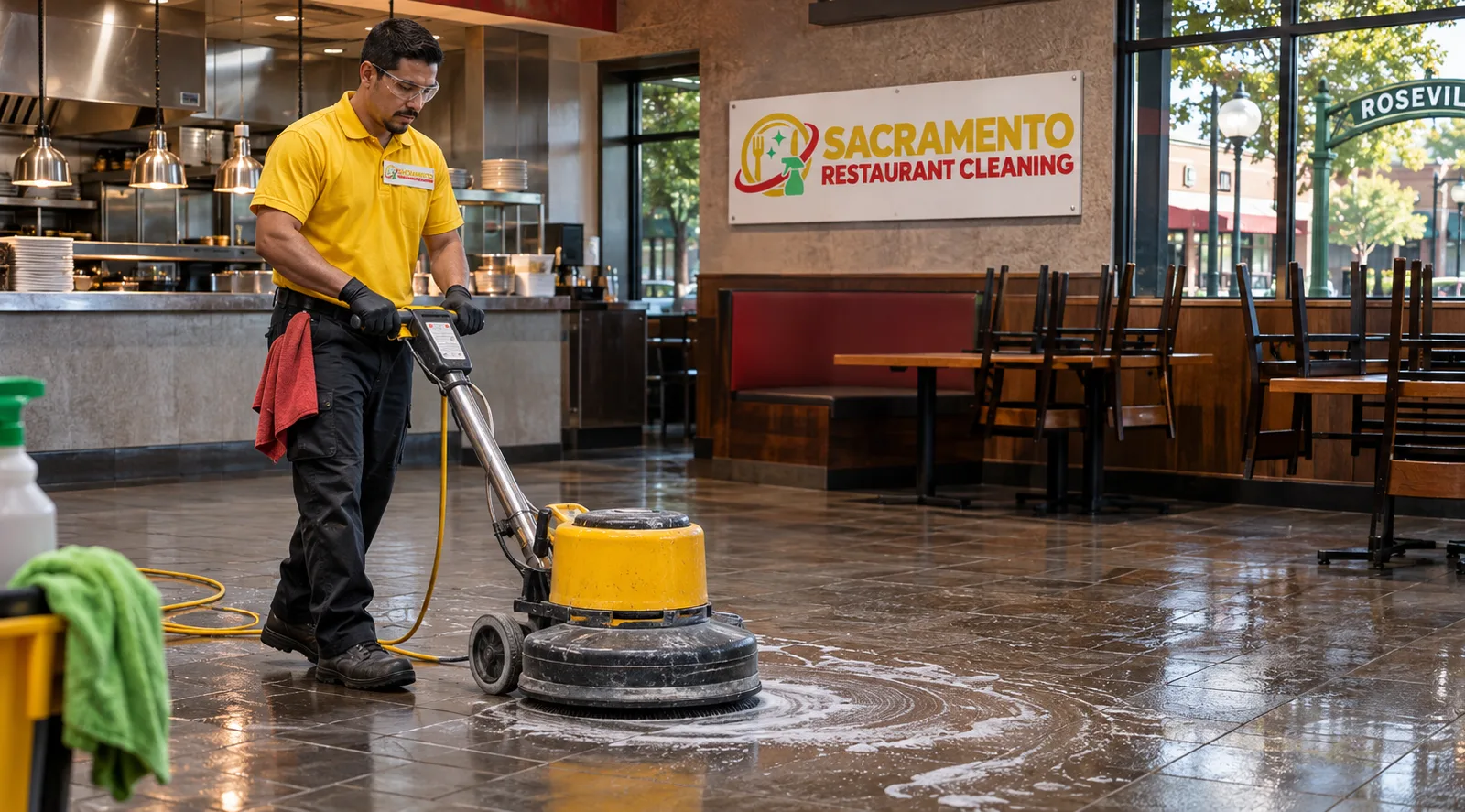
Restaurant Floor Cleaning Roseville requires more than a quick mop at closing. Cooking oils spread beyond the line, tracked-in grit wears traffic lanes, and residue collects along edges, beneath movable equipment, and around floor drains. When that buildup remains, floors can feel slick, grout darkens, and routine staff cleaning becomes less effective.
Sacramento Restaurant Cleaning provides planned cleaning based on the floor material, soil load, layout, and operating schedule. For each project, Sacramento's local restaurant service coordinates the work around access to the dining room, kitchen, prep areas, dish station, walk-in approaches, and service corridors. The scope can cover a focused restorative cleaning, recurring floor care, or a kitchen deep clean paired with floor work.
Roseville restaurants also deal with dry summer dust and grit carried through entrances. That abrasive material can dull finished floors when it remains underfoot, while wet-weather traffic can leave soil concentrated in entry lanes. Mats, threshold detailing, and suitable cleaning intervals help control both conditions without applying harsh chemistry where it is unnecessary.
A sound cleaning plan begins by identifying the flooring and testing an inconspicuous area. Quarry tile and textured commercial tile often need an alkaline degreaser, controlled dwell time, agitation, and thorough recovery. Grout lines may require separate brushing because soil settles below the tile face. Porcelain or ceramic tile can tolerate mechanical agitation when the pad or brush is appropriate, but excess chemical strength can leave residue rather than improve the result.
Sheet vinyl, luxury vinyl tile, sealed concrete, epoxy coatings, and finished resilient floors each call for different products and equipment. Low-speed rotary machines, cylindrical brushes, auto scrubbers, wet vacuums, microfiber systems, and edge tools all have a place. The correct choice depends on texture, finish condition, drainage, and available clearance.
Chemical is never left to dry on the floor. The crew agitates the loosened soil, extracts or recovers the solution, rinses when the product requires it, and checks corners and edges before the area is returned to use. Floors must have enough drying time before normal foot traffic resumes.
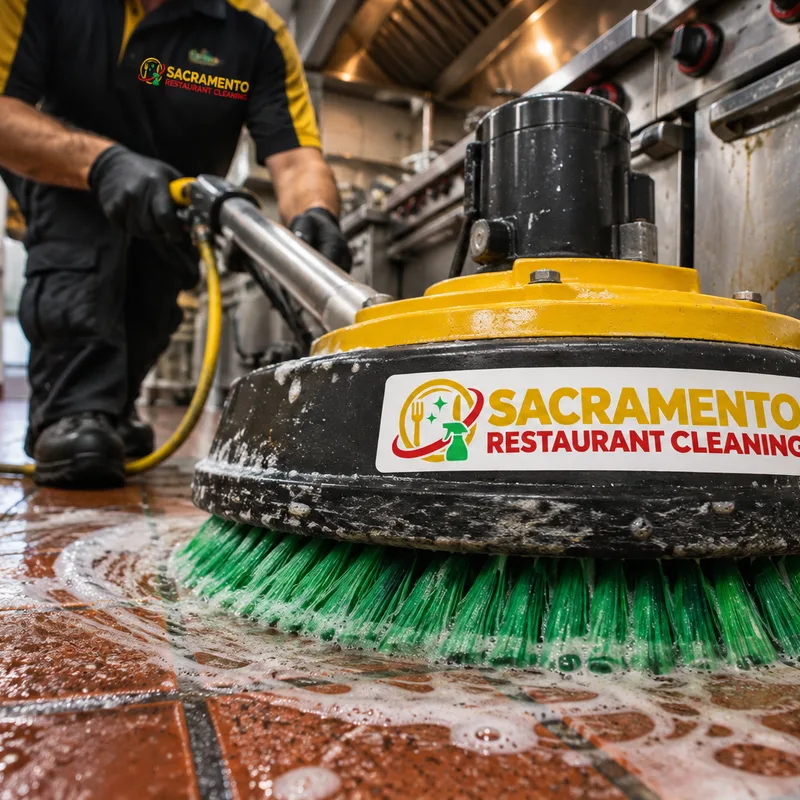
Degreasing and agitation for floors around cook lines, prep stations, dishwashing areas, floor drains, and accessible spaces beneath movable equipment.
Cleaning suited to tile, sealed concrete, and resilient floors, with attention to chair lines, table bases, perimeter edges, and visible traffic lanes.
Detailing for thresholds, mat zones, host areas, pickup routes, and back-of-house corridors where outside grit and kitchen soil tend to meet.
Targeted agitation for recessed grout, wall junctions, corners, and equipment edges that broad floor machines cannot fully reach.
A practical frequency based on traffic, menu, operating hours, flooring, and the amount of grease or tracked-in soil between visits.
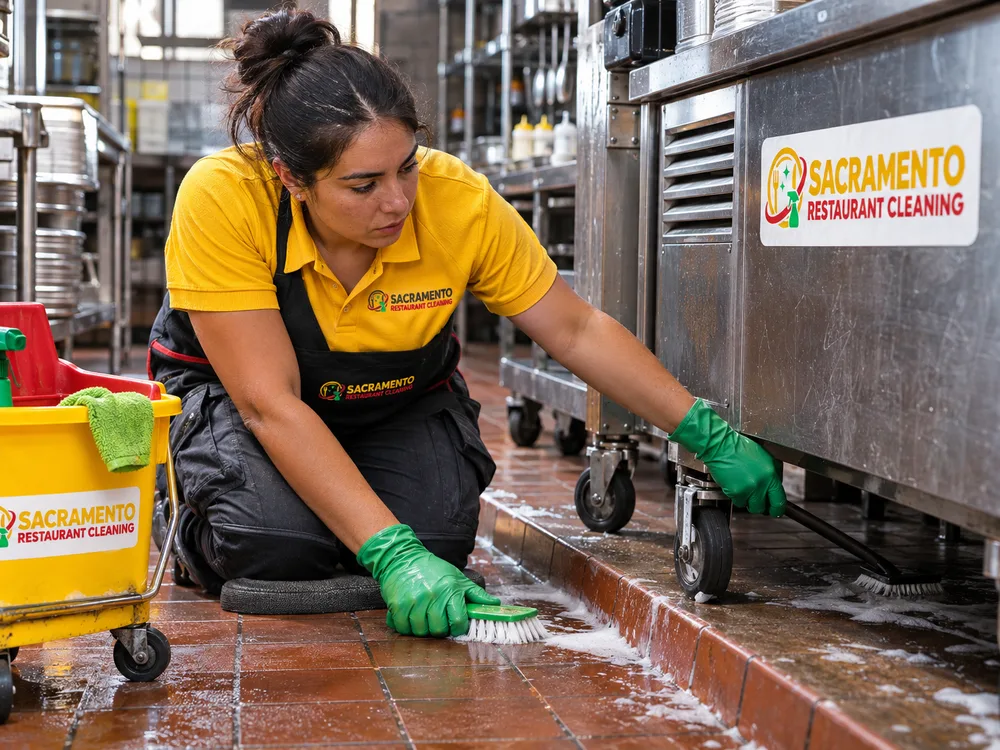
Restaurant Kitchen Deep Cleaning Roseville can include floor degreasing as part of a broader, clearly defined kitchen scope. The work should distinguish between routine floor care and the heavier detailing needed around equipment legs, casters, kick plates, base coving, drain surrounds, and hard-to-reach edges. Any equipment movement must be agreed upon before work begins. Utility-connected, heavy, or fixed appliances should not be shifted casually.
Grease management matters because applying more water does not necessarily remove oily residue. The cleaner needs suitable chemistry, enough dwell time to break the bond, mechanical agitation, and recovery before loosened soil settles again. Proper dilution also matters. An overly concentrated product can leave a film that attracts dirt or makes a floor feel tacky.
Roseville restaurants are regulated through Placer County's environmental health program. Cleaning supports sanitary operations, but it does not replace the restaurant operator's food-safety procedures or required maintenance. During service, chemicals and tools should remain controlled, food and single-use items must be protected, and wastewater must be handled through an appropriate sanitary route rather than a parking lot or storm drain.
We review flooring types, grease sources, traffic patterns, drains, damaged areas, movable equipment, water access, and the time available for cleaning and drying.
The plan identifies included rooms, treatment methods, access responsibilities, equipment limitations, scheduling, and whether the work is restorative or recurring.
Loose debris is removed, movable items are handled as agreed, signs are placed, and nearby food-contact or storage areas are protected before wet work starts.
The crew applies material-compatible chemistry, allows controlled dwell time, agitates the floor, details edges, and recovers the suspended soil.
We check traffic lanes, corners, grout, and residue-prone areas. The floor is returned to staff after the agreed drying period and a final review.
The best service window provides enough time for preparation, cleaning, recovery, and drying without disrupting food preparation. For a dinner restaurant, that may mean work after closing. A breakfast operation may prefer an afternoon window. Restaurants near the Westfield Galleria at Roseville and the Fountains at Roseville may need service timed around high customer traffic and delivery activity, while businesses in Downtown Roseville may have tighter loading or equipment-access arrangements. These conditions are confirmed before the crew arrives.
Recurring frequency depends on what happens in the space. A high-output fry line usually needs more frequent degreasing than a low-grease dining area. Pickup routes and dish stations may also soil faster than rooms with lighter traffic. Instead of putting every room on one interval, the plan can assign service by zone and condition.
Visible cracks, loose tile, failed grout, peeling finish, and deteriorated coving should be documented before cleaning. Cleaning can remove bonded soil, but it cannot repair a failed floor system. Identifying those limits early prevents unrealistic expectations and helps the restaurant plan maintenance separately.
Restaurant floor cleaning in Roseville typically ranges from about $300 to $1,200 per visit, while large kitchens, severe grease buildup, extensive grout work, or multi-area deep cleaning may cost more. Recurring maintenance is often priced differently from a first restorative service.
Final cost depends on square footage, flooring material, soil level, equipment access, required preparation, service time, and drying constraints. Moving agreed items and detailing edges or grout also add labor. Your exact cost is confirmed after a walkthrough or a detailed review of the facility and requested scope.
Share your floor types, problem areas, operating hours, and preferred service window to receive a written scope built around the way your restaurant operates.
Call for a Free QuoteA typical service may take several hours, but the actual duration depends on square footage, soil level, equipment access, and the number of flooring types. Setup, chemical dwell time, agitation, recovery, edge work, and drying all affect the schedule. A Roseville restaurant with limited loading access or a short overnight window may need the work divided into zones.
Kitchen floor cleaning is usually scheduled when food preparation has stopped and the work area can be kept clear. This protects food, gives the crew access, and allows the floor to dry before employees return. The service window is planned around the restaurant's closing time, prep schedule, deliveries, and opening duties.
The right interval is based on grease production, traffic, flooring texture, daily cleaning quality, and how quickly residue returns. Fry lines, dish stations, and kitchen routes often need a different frequency than dining rooms. An initial cleaning shows how the floor responds and helps establish a practical recurring schedule.
Movable equipment is handled only when access, weight, connections, and responsibilities have been agreed upon in advance. Light items on safe casters may be repositioned, while hard-connected, fixed, or heavy appliances generally require qualified handling. The walkthrough identifies what can be cleaned beneath and what must remain in place.
Many grease deposits and heavily soiled grout lines can be improved, but permanent discoloration, worn sealers, damaged grout, and absorbed staining may remain. A test area helps separate removable buildup from material damage. The crew can then recommend a realistic cleaning method without overstating the likely result.
Products are selected for the floor material and the type of soil, then used according to label directions and required dilution. Food, utensils, packaging, and food-contact surfaces must be protected from floor-cleaning chemicals. The work plan also accounts for controlled application, solution recovery, rinsing when required, and drying before the area reopens.
Cleaning can remove grease, detergent film, and compacted soil that contribute to a slick surface, but it cannot correct damaged flooring, poor drainage, worn texture, or an unsuitable coating. The floor is assessed before service, and any condition that appears to require repair or a flooring specialist is identified separately.
Tell Sacramento Restaurant Cleaning about your flooring, kitchen layout, buildup, and available service window. We will help define the work, access requirements, and cleaning frequency before service begins.